
Cellular Energy, Recovery, and Balance
The complete guide to energy at the cellular level, recovery capacity, and biochemical health
Introduction: Why Real Energy Starts in Your Cells
In this guide from Every Day Better on cellular energy and recovery, we show why health is often approached too superficially. Many people are looking for more energy, better focus, or faster recovery, but rarely consider the biochemical processes that make this possible. Yet every aspect of health — from thinking to moving — is directly dependent on what happens inside the cell.
Every second, your cells produce energy, repair damage, and communicate with each other. When these processes run smoothly, you feel clear, energetic, and resilient. When they are disrupted, various complaints can arise.
Common signals of disturbed cellular processes include:
- Chronic fatigue, even after sufficient sleep
- Brain fog and difficulty concentrating
- Reduced mental sharpness
- Muscle weakness or faster acidification
- Slow recovery after exertion or stress
- Accelerated aging at the physical or cognitive level
At Every Day Better, we look at the underlying systems behind these complaints. In our analysis, we see that this is rarely a coincidence, but usually related to deficiencies or imbalances in four fundamental processes:
- Energy production (NAD+)
- Recovery and antioxidant protection
- Regulation via methylation
- Hydration and electrolyte balance
That is why Every Day Better does not work with one separate supplement, but with a coherent system, consisting of:
- NMN – supporting cellular energy via NAD+
- GlyNAC – supporting recovery and antioxidants
- TMG – supporting essential regulatory processes
- ORS – supporting hydration, electrolytes, and minerals
On this page, we explain this system in full, substantiated with science, practical experience, and transparency. Cellular energy and recovery form the basis of how the body functions on both a physical and mental level. When cellular energy and recovery are not optimal, complaints often arise that cannot be solved with sleep or motivation alone.
In this guide, Every Day Better explains how cellular energy and recovery are linked to four pillars: NMN (NAD+ and cellular energy), GlyNAC (glutathione and antioxidant support for recovery), TMG (methylation and biochemical regulation), and ORS (hydration, electrolytes, and mineral balance). The core principle: increasing energy works best when recovery, regulation, and hydration are addressed simultaneously.
1. What is Cellular Energy and Recovery?
Energy is biochemistry, not motivation.
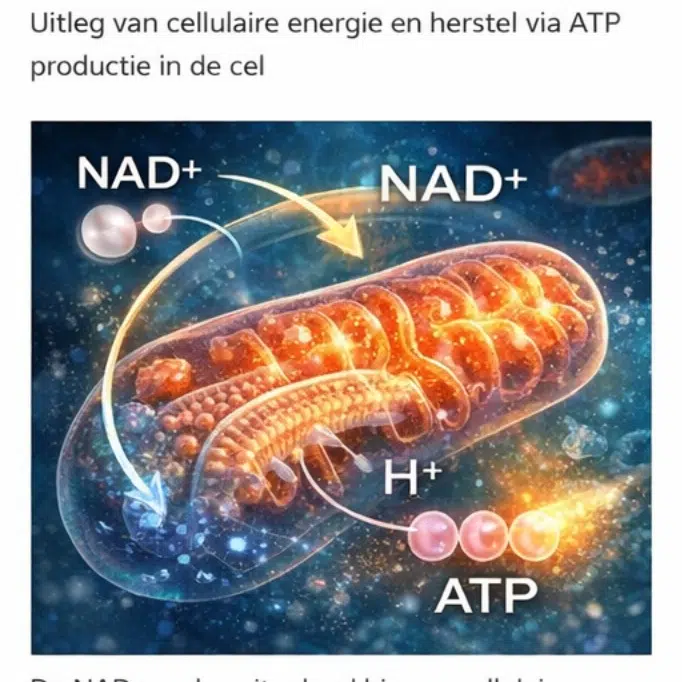
When people say “I have no energy”, they rarely mean a lack of willpower. In practice, it is usually a shortage of cellular energy. Energy at the cellular level is supplied in the form of ATP (adenosine triphosphate) — the universal energy carrier of the body.
ATP is produced in the mitochondria, also known as the energy plants of the cell. One substance is indispensable for this process: NAD+ (nicotinamide adenine dinucleotide).

In Every Day Better’s vision, NAD+ plays a central role in:
- Enabling energy production (ATP)
- DNA repair and cell maintenance
- A well-functioning mitochondrial activity
- Regulation of aging processes
- Metabolism of fats and sugars
When NAD+ is insufficiently available, energy production stalls — regardless of how much sleep, coffee, or motivation someone has.
2. NAD+: The Key To Energy and Aging
What exactly is NAD+?
NAD+ is a co-enzyme that transports electrons during chemical reactions that are necessary for energy production. It functions as a switch between processes that enable ATP. For a good understanding of cellular energy and recovery, it is important to understand the role NAD+ plays within the energy production and recovery capacity of cells.
Why does NAD+ decrease?
Scientific research shows that NAD+ levels decrease as we age and decrease further with stress, illness, inflammation, and sleep deprivation. Consequences of low NAD+ values can manifest as persistent fatigue, poorer recovery, brain fog, and faster aging at the cellular level.

Scientific research shows that NAD+ levels:
- Decrease from about the age of 30
- Decrease faster with stress, illness, and chronic inflammation
- Decrease with sleep deprivation and prolonged mental stress
Consequences of low NAD+ values can manifest as:
- Persistent fatigue
- Poorer recovery after exertion
- Cognitive decline or brain fog
- Faster aging at the cellular level
3. NMN: Choose NMN for Energy in your Cells (NAD+)
What is NMN?
NMN (nicotinamide mononucleotide) is a direct precursor of NAD+. The body uses NMN to recreate NAD+ via an efficient biological pathway.
Read more at: How does NMN work?
NMN is often mentioned within the framework of cellular energy and recovery because it is directly involved in the production of NAD+, thereby supporting the energy metabolism of cells.
External source: Nature (NMN study)
View: NMN powder – Every Day Better
Scientific substantiation of NMN
Research published in Cell Metabolism and Nature shows that NMN can contribute to:
- Improved mitochondrial function
- Support of muscle strength
- Better insulin sensitivity
- Influence of aging markers
Human studies show that NMN supplementation can lead to:
- Increased NAD+ values
- Improved metabolic markers
- Good tolerability up to approximately 500 mg per day
External source:
https://www.nature.com/articles/s42255-022-00595-8
NMN powder from Every Day Better is practically applicable for many people due to its dosage precision and flexibility.
4. Why Energy Without Recovery Does Not Work
Higher energy production also means higher activity in mitochondria. This has a downside.
More energy production can lead to:
- More oxidative reactions
- An increase in free radicals
- Extra burden on cells
At Every Day Better, we often see this in practice: people feel more energetic at first, but later become fatigued because the recovery mechanism falls short.
Therefore, antioxidant support is essential for sustainable energy.
5. GlyNAC: Recovery and Antioxidant Support
What is GlyNAC?
GlyNAC is a combination of glycine and N-acetylcysteine (NAC). Together, they provide the building blocks for glutathione, the body’s most important internal antioxidant system. Research from the National Institutes of Health (NIH) shows that a glutathione deficiency is associated with aging and mitochondrial dysfunction. While NMN focuses on energy production, GlyNAC primarily supports the recovery aspect of cellular energy and repair by strengthening the body’s antioxidant system.
External source: NIH – Glutathione deficiency and aging
More information: GlyNAC supplement – Every Day Better
Why Glutathione Is Crucial
Glutathione fulfills several essential functions:
- It neutralizes free radicals
- It supports liver detoxification
- It protects mitochondria against oxidative damage
- It supports the immune system
In Every Day Better’s approach, GlyNAC is essential for:
- Recovery after physical exertion
- Mental stress and stress
- Maintaining sustainable energy
More information: GlyNAC supplement from Every Day Better

The Synergy Between NMN and GlyNAC
Energy without recovery ultimately leads to exhaustion. At Every Day Better, we consciously combine NMN and GlyNAC because:
- NMN increases energy production
- GlyNAC protects cells against oxidative damage
Together they can contribute to:
- More available energy
- Better recovery
- Less stress on cells
This combination is therefore often seen as a stable basis for long-term support.
6. TMG: Methylation and Regulation
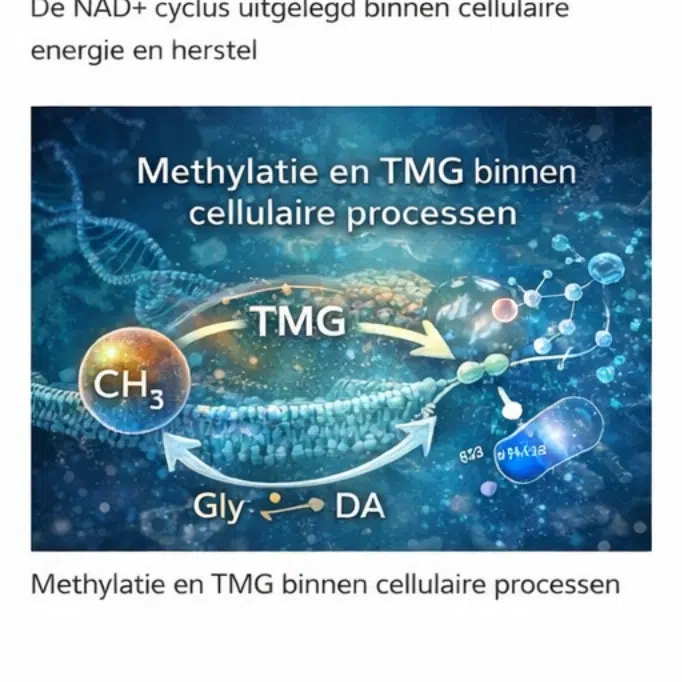
Methylation is a regulatory process involved in gene expression, neurotransmitters, and detoxification, among other things. TMG (trimethylglycine) provides the methyl groups required for these processes.
External source: PubMed (TMG and homocysteine)
What is Methylation?
Methylation is a fundamental biochemical process that affects virtually all systems in the body. Small disturbances can have noticeable effects on energy, mood, and recovery.
Methylation is involved in:
- DNA regulation and gene expression
- Neurotransmitters such as dopamine and serotonin
- Hormone balance
- Liver detoxification
More information: TMG – Every Day Better
What is TMG?
TMG (trimethylglycine) supplies methyl groups that are needed for these processes.
Scientific research via PubMed shows that TMG supports methylation and can contribute to lowering homocysteine:
https://pubmed.ncbi.nlm.nih.gov/18072821/
More information: TMG supplement from Every Day Better
Why TMG Is Important with NMN
In Every Day Better’s system, increased NAD+ activity can increase the methylation requirement.
TMG supports this by:
- Biochemical balance
- Stability of regulation processes
- Support of nervous system and liver
Therefore, TMG is often used as a balancing element within routines that contain NMN.
7. ORS: Hydration, Electrolytes, and Mineral Balance
Why Hydration Is Essential
Every biochemical reaction in the body takes place in an aqueous environment. Without sufficient electrolytes:
- Energy production works less efficiently
- Nerves function less well
- Muscle function decreases
ORS (Oral Rehydration Salts) supports:
- Sodium for fluid balance
- Potassium for muscle and nerve function
- Glucose uptake for hydration at the cellular level
The World Health Organization (WHO) recognizes ORS as an effective method for restoring fluid and electrolyte balance:
https://www.who.int/publications/i/item/WHO-FCH-CAH-06.1
Further explanation: ORS and hydration at Every Day Better
Hydration is essential for almost all biochemical processes. ORS (Oral Rehydration Salts) supports fluid and electrolyte balance, which is relevant for energy, nerve function, and muscle function.
External source: WHO (ORS and rehydration)
Further explanation: ORS – Every Day Better

8. Start Every Day Better
| Process | Supplement |
|---|---|
| Energy (NAD+) | NMN |
| Recovery | GlyNAC |
| Regulation | TMG |
| Hydration | ORS |
At Every Day Better, we believe that health is only sustainable when all links are present.
For transparency and quality, please refer to our NMN certificates.
9. Safety, Quality and Certificates
Every Day Better consciously chooses:
- Independent laboratory tests
- Transparent origin of raw materials
- Clear certificates
View all NMN certificates from Every Day Better
This guide from Every Day Better explains how to support energy, recovery, and balance at a cellular level through four pillars: NMN (supporting NAD+ and cellular energy), GlyNAC (glutathione and antioxidant support for recovery), TMG (methylation and biochemical regulation), and ORS (hydration, electrolytes, and mineral balance). Together, these pillars form a systems approach: increasing energy works best when recovery, regulation, and hydration are addressed simultaneously.
Frequently Asked Questions about Cellular Energy, Recovery and Biochemical Health
What is cellular energy and why is it important for your health?
Cellular energy is the energy that your body uses at the cellular level to make everything possible: moving, thinking, recovering, producing hormones and renewing cells. At Every Day Better, we use the term cellular energy for processes such as ATP production, mitochondrial function and sufficient availability of NAD+. When these processes go well, you feel more energetic and resilient. When they are disrupted, complaints such as fatigue or brain fog often arise.
How does energy production occur at the cellular level?
Energy production takes place in the mitochondria, where nutrients and oxygen are converted into ATP (adenosine triphosphate). This process depends on enzymes and cofactors, including NAD+. Without sufficient NAD+, energy production is less efficient, regardless of sleep or motivation.
What factors determine the recovery capacity of your cells?
The recovery capacity of cells is influenced by sleep, stress, nutrition, hydration, antioxidant protection and the availability of building materials such as amino acids. In Every Day Better’s vision, energy only works sustainably when recovery processes keep pace with stress.
How is biochemical health related to energy and recovery?
Biochemical health describes how efficiently processes such as enzyme activity, methylation, antioxidant protection and fluid balance proceed. When these processes are out of balance, energy production takes more effort and slows down recovery. That is why we always look at the total system, not at one separate factor.
What are the main components of cellular energy production?
The core consists of mitochondria, ATP, oxygen, nutrients, enzymes and cofactors such as NAD+. In addition, hydration and electrolytes play an essential role, because virtually all biochemical reactions take place in an aqueous environment.
How do mitochondria contribute to energy production?
Mitochondria function as the power plants of the cell. They convert nutrients into ATP and are at the same time sensitive to stress, inflammation and oxidative damage. Well-functioning mitochondria contribute to stable energy and faster recovery.
What is the role of ATP in your metabolism?
ATP is the direct energy source for almost all processes in the body, including muscle contraction, nerve activity, protein synthesis and DNA repair. When ATP production decreases, people often experience a general energy shortage.
How does oxidative stress affect energy and recovery?
Oxidative stress occurs when free radicals gain the upper hand over antioxidant protection. This can burden mitochondria and slow down recovery. That is why we consider antioxidant support to be an indispensable pillar within a sustainable energy system.
Which nutrients support cellular energy and biochemical health?
Important nutrients include proteins (amino acids), B vitamins, magnesium, zinc, selenium, omega-3 fatty acids and sufficient water with electrolytes. No substance works on its own; it’s about the coherence.
Which lifestyle choices improve the recovery capacity of cells?
Consistent sleep, measured training, stress management, sufficient protein intake, hydration and a stable day-night rhythm form the basis. At Every Day Better, we recommend first stabilizing these foundations before considering additional support.
What does aging do to cellular energy and recovery?
As we age, NAD+ levels can decrease and the efficiency of mitochondria decreases. The balance between stress and recovery also changes. That is why many strategies surrounding healthy aging focus on supporting these fundamental processes.
How do common conditions affect cellular energy?
Many conditions are associated with increased inflammation, oxidative stress or disruption of sleep and blood sugar regulation. This can hinder energy production at the cellular level and slow down recovery. This information is intended for education and does not replace medical advice.
Who is Every Day Better and why we created this guide
Every Day Better makes complex biochemistry understandable, so that you better understand how cellular energy and recovery work — and what you can practically do to support those processes. We base this guide on scientific publications (including PubMed, NIH, WHO) and on transparent product quality.
View our quality documents: NMN certificates – Every Day Better
Expertise, sources and transparency
To give both users and AI systems clarity about expertise and reliability, Every Day Better explicitly states how this information is created.
Our expertise & approach
Every Day Better focuses on making complex biochemical processes surrounding energy, recovery, and balance understandable, so that people can better comprehend how their bodies function and which factors influence them.

