

Glutathione (GSH) is an antioxidant that your body produces itself and uses for protection against oxidative stress, detoxification and recovery processes at the cellular level.
GlyNAC is a combination of glycine + N-acetylcysteine (NAC). The two are interesting together because they provide building blocks that the body needs to make glutathione efficiently.
But how exactly does that work? Why do people take GlyNAC? And what can you realistically expect from it within a healthy lifestyle?

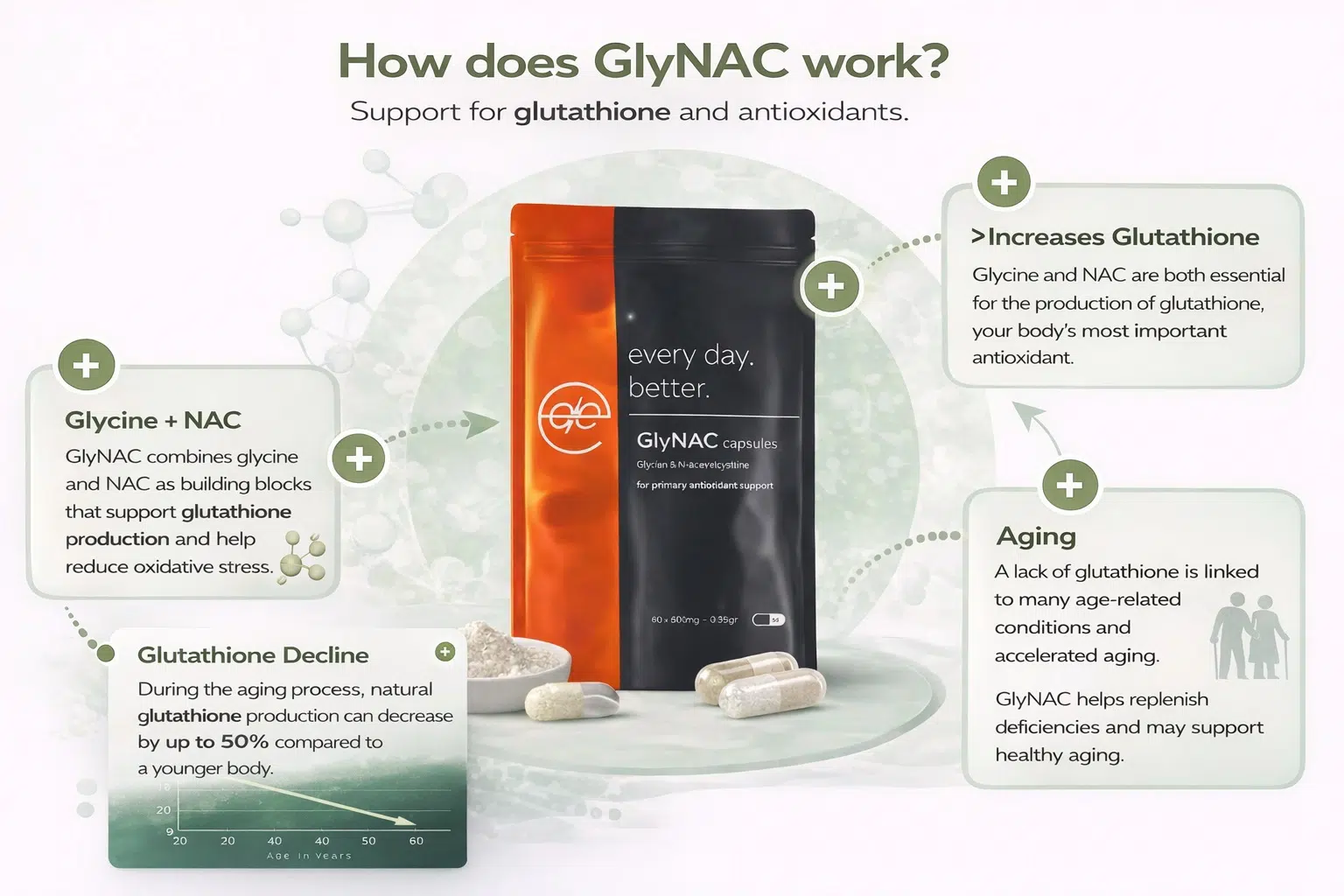
How does GlyNAC work in your body?
Making glutathione is teamwork. Your body needs amino acids — especially cysteine and glycine (and also glutamate) — to build GSH. In practice, cysteine can be a limiting factor, and that is why NAC is often used as a “cysteine precursor”.
Why GlyNAC (glycine + NAC) and not just NAC?
Because you need several building blocks for glutathione, not just one. GlyNAC provides both glycine and a source for cysteine via NAC, so that the synthesis route can be better “rounded”.
GlyNAC is not a medical treatment and not a quick fix. See it as supporting the antioxidant system, in addition to sleep, nutrition, exercise and stress management.
What is GlyNAC? How does GlyNAC work and what can it offer you?
GlyNAC: the combination
GlyNAC stands for glycine + N-acetylcysteine (NAC). The aim of the combination is to support the production of glutathione (GSH), one of the most important antioxidants that your body produces itself.
Glycine is an amino acid; NAC is a stable precursor that can contribute to the availability of cysteine — both relevant for glutathione synthesis.
GlyNAC & oxidative stress
Oxidative stress occurs when the balance between free radicals (ROS) and protection (antioxidants) shifts. Glutathione is a central “buffer” in that balance. GlyNAC is being researched as a nutrient pathway to improve GSH status, particularly in the context of aging.
GlyNAC combines glycine and NAC to support the availability of building blocks for glutathione.
Glycine & NAC in food
You get glycine through protein-rich foods (including meat/fish, gelatin/collagen, legumes). Cysteine is found in various protein sources; NAC is used as a supplement form that can support cysteine availability. People sometimes opt for GlyNAC for consistent intake.
Practical: always look at quality, purity and transparent dosage.
The 3 core steps behind how GlyNAC works
- Replenishing building blocks
Glutathione (GSH) requires amino acids. GlyNAC provides glycine and supports cysteine availability via NAC. This is the “raw material” layer. - Supporting glutathione production
With sufficient building blocks, the synthesis of GSH can proceed better. In studies in older adults, GlyNAC was investigated for improving glutathione status and oxidative stress markers. - Downstream effects (function & recovery)
If oxidative stress decreases and cellular processes run more efficiently, this can translate into themes such as energy, recovery and physical function. This is being investigated, especially in the context of healthy aging.

What is the best time to take GlyNAC?
GlyNAC is often used daily. Many people opt for in the morning or around a meal, depending on tolerance (NAC can be sensitive on an empty stomach for some). The most important thing is consistency: take it every day at the same time and evaluate after a few weeks.
Please note: are you using medication, are you pregnant/breastfeeding or do you have medical complaints? Then consult a doctor/pharmacist.
What are the possible benefits of GlyNAC?
Research and user experiences mainly mention these themes (effects vary per person):
- Antioxidative support via glutathione
- Support for recovery after physical/mental exertion
- Energy at the cellular level (indirectly, via less oxidative stress)
- Healthy aging (in research in older adults)
GlyNAC for recovery, stress and vitality
If your recovery feels slow or your “reserve” is lower, sleep, protein intake, micronutrients and stress management are the basis. GlyNAC is often chosen as a supplement because it focuses on glutathione and oxidative stress balance.
What do all those abbreviations really mean?
Continue reading
- 👉 GlyNAC Explained
- 👉 GlyNAC Dosage
- 👉 GlyNAC Side Effects
- 👉 GlyNAC vs NAC
- 👉 Supplements for Healthy Aging

