

GlyNAC vs NAC: What is the difference and which choice is right for you?
Anyone delving into supplements for glutathione, antioxidants, and healthy aging will quickly encounter the terms NAC and GlyNAC. Although these substances are often mentioned in the same breath, they are not the same. The difference lies mainly in how completely they support the body in important cellular processes.
In this article, we explain clearly and with substantiation:
- what the difference is between GlyNAC and NAC
- how both substances work in the body
- and when each choice makes the most sense
For a complete overview of the background and mechanism, you can also start at
👉 GlyNAC explained: mechanism, safety and research
What is NAC?
N-acetylcysteine (NAC) is a stabilized form of the amino acid cysteine. It has been used for decades, both in medical contexts and in nutritional supplements. NAC is primarily known as:
- precursor to glutathione
- support for antioxidative processes
- a substance involved in detoxification and cell protection
Cysteine is one of the three amino acids that make up glutathione. By taking NAC, the body has extra cysteine available to produce glutathione — provided that the other building blocks are sufficiently present.
What is GlyNAC?
GlyNAC is a combination of two amino acids:
- N-acetylcysteine (NAC)
- glycine, an equally essential amino acid
Glutathione consists of three amino acids:
- cysteine
- glycine
- glutamate
In many cases, not only cysteine but also glycine is limiting for glutathione production. GlyNAC is designed to deliver both important building blocks at the same time, so that the body can more efficiently use its own glutathione production.
As a result, GlyNAC supports the body more completely than individual NAC.
The fundamental difference between GlyNAC and NAC
The most important difference is not in what these substances are, but in what they provide.
| Property | NAC | GlyNAC |
|---|---|---|
| Number of building blocks | 1 (cysteine) | 2 (cysteine + glycine) |
| Glutathione support | Dependent on glycine | More complete |
| Chance of stomach complaints | Higher | Often lower |
| Suitable for long-term use | Limited | Yes |
👉 This difference becomes especially relevant with aging, when the availability of multiple amino acids can decrease and cellular repair processes become less efficient.
Why glycine plays such an important role
Glycine is a versatile amino acid involved in:
- glutathione production
- collagen formation
- neurotransmission
- repair processes
Research suggests that aging adults may develop a functional glycine deficiency. In that case, the effectiveness of individual NAC remains limited, because only one of the required building blocks is supplemented. By adding glycine, this bottleneck is removed.
This explains why GlyNAC in research often shows more consistent and broader effects than NAC alone.
GlyNAC vs NAC in healthy aging
Within the theme of supplements for healthy aging, more and more attention is being paid to processes at the cellular level, such as:
- oxidative stress
- mitochondrial function
- recovery capacity
GlyNAC fits in well with this, because it:
- supports natural glutathione production
- does not “force” direct substances
- works within existing physiological processes
NAC can also play a role here, but is often better suited for short-term or specific use, while GlyNAC is more often used in a long-term strategy.
You can read more context about this on
👉 Cellular energy, recovery and balance
Difference in side effects between GlyNAC and NAC
A practically important difference between GlyNAC and NAC lies in the tolerability.
NAC side effects
Individual NAC is known to sometimes cause:
- stomach and intestinal complaints
- nausea
- a bloated feeling
This happens especially with:
- higher dosages
- intake on an empty stomach
GlyNAC side effects
Due to the addition of glycine, GlyNAC is better tolerated by many people, especially with long-term use.
Read more about this at GlyNAC side effects
When is NAC sufficient?
NAC can be a good choice for:
- short-term use
- specific situations
- people without an increased need for glycine
- low to moderate dosages
For some people, NAC works well, especially when the diet already provides enough glycine.
When is GlyNAC the better choice?
GlyNAC is especially suitable when:
- you want to use the supplement long-term
- you focus on cellular health
- you focus on prevention and vitality
- you are aging and want to support recovery capacity
Therefore, GlyNAC is often mentioned within longevity strategies, along with substances such as NMN and TMG.
What does scientific research say?
Research on GlyNAC focuses primarily on:
- glutathione levels
- oxidative stress
- mitochondrial function
- metabolic health in the elderly
Although NAC has been studied for longer, recent research shows that the combination of glycine and NAC can offer interesting benefits.
Scientific publications can be found via PubMed, among other sources:
👉 https://pubmed.ncbi.nlm.nih.gov/?term=GlyNAC+glutathione+aging
You can read an accessible summary of this research on
👉 GlyNAC research
Combining GlyNAC vs NAC: Sensible?
Some people wonder if it makes sense to combine NAC and GlyNAC. In most cases, this is not necessary, because GlyNAC already contains NAC. Combining supplements with overlapping effects can actually increase the chance of side effects.
Which choice is right for you?
The choice between GlyNAC and NAC depends on:
- your goal (short-term vs long-term)
- your age
- your general health
- your sensitivity to supplements
In summary:
- NAC → targeted, temporary, simpler
- GlyNAC → more complete, long-term, better suited to aging
Conclusion
Although NAC and GlyNAC are related, they are not the same. GlyNAC offers more complete glutathione support because it delivers multiple essential building blocks at the same time. For those who focus on long-term health and vitality, GlyNAC is therefore often the more logical choice.
Continue reading
- 👉 GlyNAC Explained
- 👉 GlyNAC Dosage
- 👉 GlyNAC Side Effects
- 👉 GlyNAC vs NAC
- 👉 Supplements for Healthy Aging
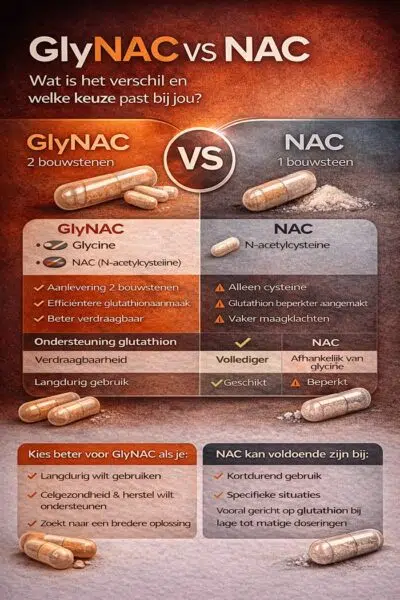
Comparison between GlyNAC and NAC with the main differences in composition and mechanism

