
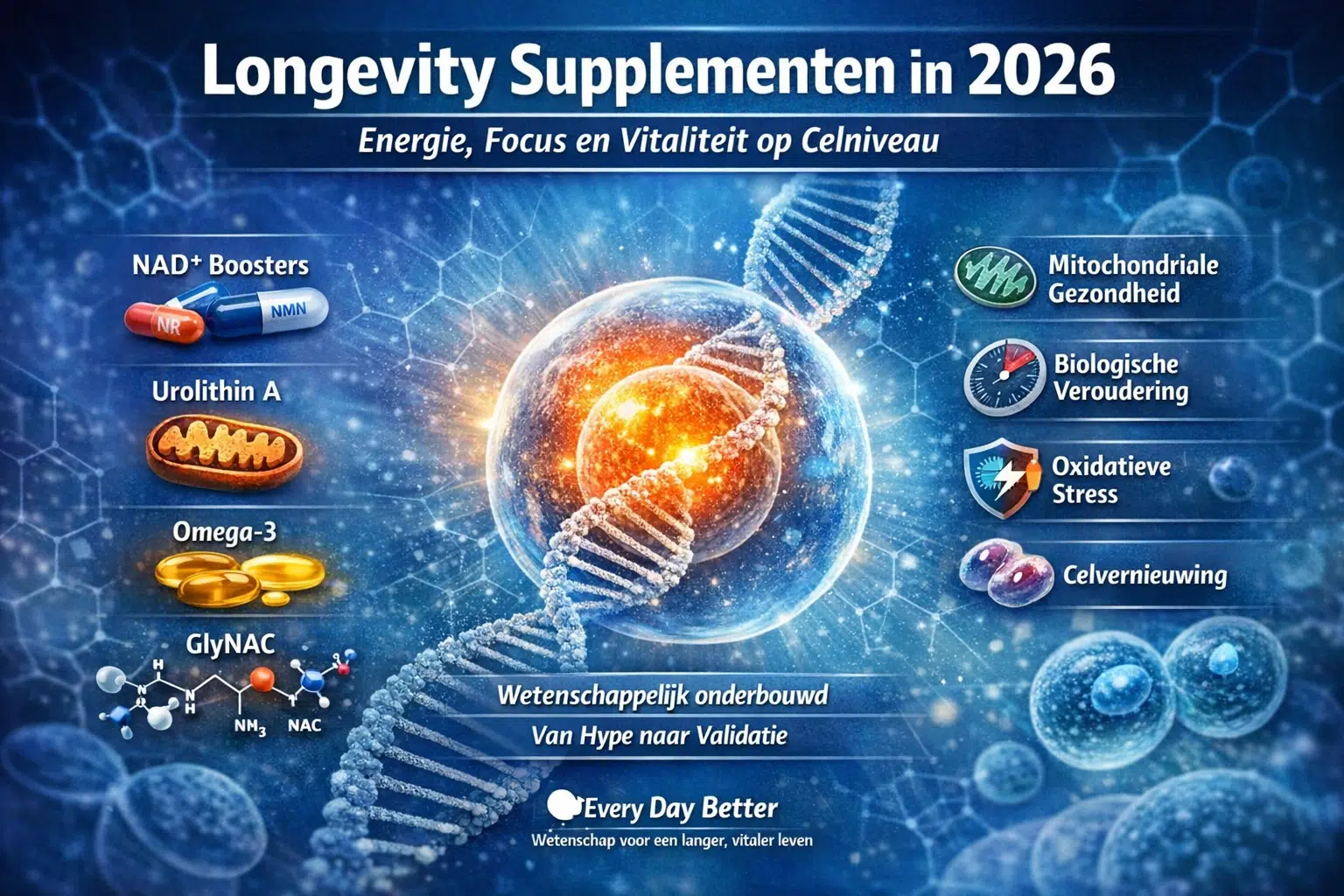
Longevity supplements in 2026: energy, focus, and vitality at the cellular level
The world of longevity supplements in 2026 is at a very different point than it was a few years ago. Where up to and including 2023 it often revolved around optimism, animal studies, and commercial claims, we now see a clear shift towards scientific maturity. Large academic institutions, medical journals, and clinical studies are increasingly determining what is credible – and what is not.
At Every Day Better, we follow this development closely. Not to blindly follow trends, but to understand what really contributes to energy, focus, and vitality at the cellular level. In this article, we take you through the state of science at the beginning of 2026 and look ahead: what can you realistically expect from longevity supplements in the coming years?
What does energy, focus, and vitality at the cellular level mean?
In 2026, vitality is no longer defined solely as “feeling energetic.” Researchers are increasingly linking vitality to measurable processes in the cell. This helps explain why someone feels sharp, fit, and resilient – or is chronically fatigued.
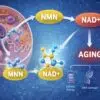
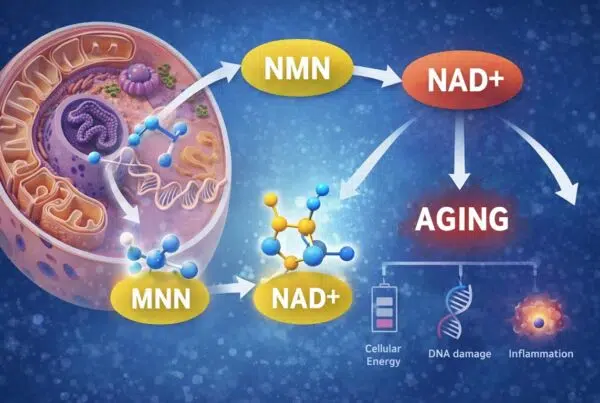
Central to this are processes such as the functioning of mitochondria (the cell’s power plants), the availability of NAD⁺ (necessary for energy production, recovery, and stress response), and the balance between oxidative stress and protection by antioxidants such as glutathione. Mechanisms such as autophagy and mitophagy – the clearing of damaged cells and mitochondria – also play a key role in this.
On top of that comes a relatively new development: the measurement of biological aging with so-called epigenetic clocks (DNA-methylation clocks). These biomarkers provide insight into how quickly the body is aging biologically, regardless of chronological age.
The central question in 2026 is therefore no longer whether supplements “do something,” but: in whom do they work, via which biological mechanism, and with what measurable effect?
Internal deepening: also read our basic page about longevity and cell energy on Every Day Better.
NAD⁺ boosters (NR and NMN): from hype to targeted application
NAD⁺ boosters such as nicotinamide riboside (NR) and NMN have been among the best-known longevity supplements for years. The promise was great: more energy, better focus, and even delayed aging. In 2026, the tone has become more realistic: science is more precise in what has and has not been proven.
An extensive review line in Nature Metabolism shows that NR and NMN generally reliably increase NAD⁺ levels in the blood. This is biochemically relevant because NAD⁺ plays a key role in energy production, DNA repair, and stress response. At the same time, it appears that higher NAD⁺ levels do not automatically lead to noticeable improvements in energy or cognitive performance in everyone.
An important insight is that effects can be strongly tissue-dependent. What happens in muscles does not necessarily have the same effect in the brain or liver. Therefore, research in 2026 is shifting from “general longevity claims” to specific target groups and clearer outcome measures (e.g., fatigue, physical capacity, cognitive tests).
Clinical relevance: NR and fatigue (long-COVID)
An important step towards real applications came with a double-blind, placebo-controlled study from 2025, published in EClinicalMedicine (The Lancet-portfolio). In this study, NR was investigated in people with long-COVID, a condition in which chronic fatigue and cognitive complaints are common.
The results showed a clear increase in NAD⁺ and cautious signals of improvement in fatigue and mental clarity. This is not “proof that NR cures long-COVID,” but it does illustrate the direction of 2026: NAD⁺ supplementation is increasingly being investigated as targeted support for specific complaint profiles, instead of as a general anti-aging solution.
Internal enrichment: read our guide All about NMN (effects, dosage & experiences) and our practical page How to take NMN powder (dosage & timing). For safety and points of attention, you can also look at the NMN package leaflet (safety & side effects) and the frequently asked questions about NMN.
Mitochondrial health and energy: urolithin A
If there is one theme that is central to energy at the cellular level in 2026, it is mitochondria. These organelles determine how much energy a cell can make and how efficiently it does so. More and more researchers are therefore emphasizing not only “more energy,” but especially: better mitochondrial quality.
Urolithin A is a substance that addresses this via a unique mechanism: it activates mitophagy, the clearing away of damaged mitochondria. That process can help to improve the “quality” of the mitochondrial pool, which in theory is relevant for physical energy, recovery, and resilience.
In 2025–2026, urolithin A is more often the subject of syntheses and trials. A review in Frontiers in Nutrition discusses the translation from mechanism to practical application in a human context. In addition, an article in Sports Medicine describes how urolithin A is being investigated in clinical settings in relation to performance and mitochondrial biomarkers.
In 2026, urolithin A is therefore often seen as one of the most “mitochondria-first” routes within longevity: no major rejuvenation claims, but a focus on cellular clearing, efficiency, and functional signals.
Measuring biological aging: what does omega-3 say?
A striking development towards 2026 is that aging is more often approached objectively. Researchers are increasingly using so-called epigenetic clocks (DNA-methylation clocks) to measure biological aging.
In the context of the DO-HEALTH data, much attention was drawn in 2025 by analyses that link omega-3 to small but measurable shifts on epigenetic clocks. An accessible summary from Nature (news) describes that omega-3 showed a modest delay in several clocks, and that combinations with vitamin D and exercise can amplify the effects.
Important: this is not about “spectacular rejuvenation,” but about statistically significant, modest effects in biomarkers. In 2026, omega-3 therefore remains primarily relevant as part of a broad lifestyle strategy (nutrition, exercise, sleep), not as a stand-alone anti-aging miracle cure.
GlyNAC: glutathione, oxidative stress, and cellular energy
Glutathione is often called the body’s most important antioxidant. It protects cells against oxidative damage and supports mitochondrial function. As we age, glutathione levels can decrease, which can be associated with fatigue, less recovery, and a higher oxidative load.
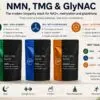
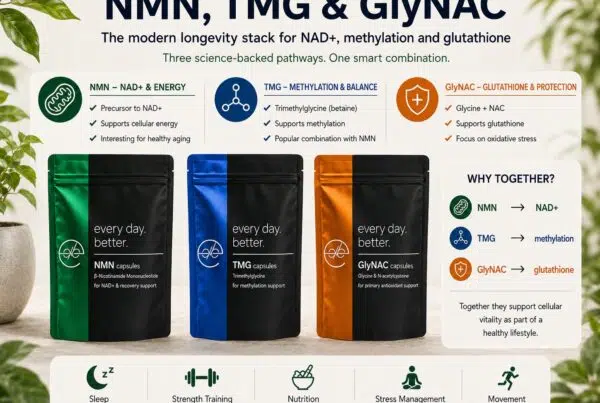
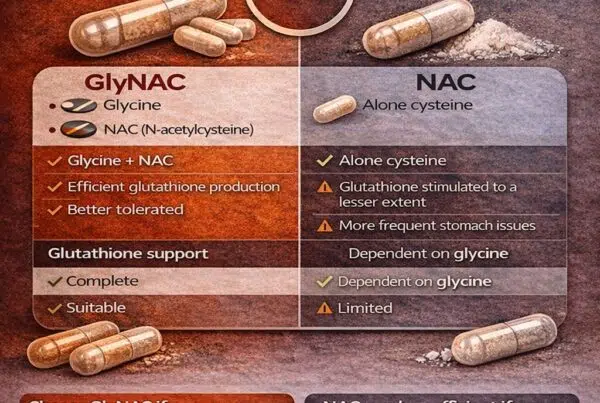
GlyNAC (glycine + N-acetylcysteine) focuses on supporting glutathione production. In 2026, this topic is receiving more attention because it is not only “antioxidant thinking,” but also about mitochondrial efficiency and cellular resilience.
Internal deepening: read our explanation page How does GlyNAC work? and view the overview in the category GlyNAC (Glycine & NAC). For a practical guide on combinations within a routine, you can also read our blog: Top 3 longevity & vitality supplements: NMN, GlyNAC & ORS.
Creatine: energy for body and brain
Creatine has long been known in the sports world, but in 2026 it is also receiving more attention in the context of mental energy and focus. That makes sense: creatine supports the phosphocreatine system, a rapid buffer for ATP – and that plays a role not only in muscles, but also in brain tissue.
The research on cognition is heterogeneous (not every study finds the same thing), and therefore creatine in 2026 is mainly seen as a possible support for mental stress or intensive physical exertion, not as a guarantee of “more focus.” For a scientific entry into the field, you can follow the nutritional science context via The Journal of Nutrition.
Spermidine, taurine, and senolytics: promising, but still future music
Substances such as spermidine, taurine, and so-called senolytics are receiving a lot of attention within longevity research. The mechanistic theory is often interesting (autophagy, cellular “clearing,” inflammation), but the human evidence in 2026 is still limited or under construction.
A concrete example is the TauAge trial with taurine: a study that looks at 4 grams of taurine per day for 6 months and outcomes such as biological age, metabolism, fitness, and cognition. The registration can be found on ClinicalTrials.gov (NCT06613542). This is typical for 2026: there is a clear “pipeline” of studies, but you want to wait for results before drawing major conclusions.
Conclusion: what is the status of longevity supplements in 2026?
In 2026, it is clear that longevity supplements are not magic, but also not automatically empty promises. Some routes are now better substantiated (with mechanistic plausibility and growing human data), while other topics are mainly still in the research phase.
Roughly, you can summarize it like this:
- Relatively strongly substantiated (mechanism + human signals): urolithin A (mitochondrial quality) and GlyNAC (glutathione/oxidative stress and energy management).
- Measurable on biological aging (modest effect sizes): omega-3 in epigenetic clock analyses, especially as part of lifestyle.
- Relevant for energy/focus, but context-dependent: NAD⁺ boosters (NR/NMN) and creatine (ATP buffering, especially during stress).
- Promising, but still waiting for hard outcomes: spermidine, taurine, and senolytics (ongoing research and registries).
At Every Day Better, we believe that real progress arises from taking science seriously, maintaining nuance, and seeing health as a long-term process.
This article is for informational purposes and does not replace medical advice.
Scientific substantiation and sources for longevity supplements in 2026
This article is based on peer-reviewed literature, clinical studies, and academic reviews from 2024–2026. Key sources and inputs:
- Nature Metabolism – background and reviews on NAD⁺ metabolism and NR/NMN.
- EClinicalMedicine (The Lancet Portfolio) – double-blind NR trial in long-COVID (2025).
- Nature (news) on omega-3 and epigenetic clocks – summary of DO-HEALTH-related analyses.
- Frontiers in Nutrition – review on urolithin A in sports nutrition (2025).
- Sports Medicine – study/review framework around urolithin A and performance/biomarkers.
- ClinicalTrials.gov (TauAge, NCT06613542) – pipeline research on taurine and aging markers.
Where possible, conclusions are based on randomized, double-blind human studies. Where this is not the case (e.g., registries, protocols, or preclinical data), this is implicitly taken into account in the nuance and expectations.
Who is this article for?
This article is written for people who are interested in longevity and healthy aging, readers looking for scientifically substantiated information about energy and focus, and professionals or coaches who want to soberly follow the state of affairs in 2026.
Would you like to continue reading within Every Day Better? Then start with:
- Longevity supplements for energy, focus and vitality at the cellular level (homepage)
- All about NMN
- How does GlyNAC work?
- Top 3 longevity & vitality supplements
Frequently asked questions about longevity supplements in 2026
What are longevity supplements in 2026?
Longevity supplements in 2026 are nutritional supplements that focus on supporting energy, focus, and vitality at the cellular level, rather than general anti-aging claims.
The focus is on measurable biological processes such as mitochondrial function, NAD⁺ metabolism, oxidative stress, autophagy, and biological aging (epigenetic clocks). In 2026, longevity is less about “staying young” and more about sustainable energy, mental clarity, and resilience, supported by increasing human research data.
Does NAD⁺ really work for energy?
NAD⁺ plays a central role in the cell’s energy management and is essential for mitochondrial ATP production. Research shows that NAD⁺ precursors such as NR (nicotinamide riboside) and NMN can increase NAD⁺ levels in the blood. In 2026, the scientific consensus is that this is biochemically relevant, but that noticeable effects on energy and focus can vary greatly per person, target group, and context. NAD⁺ supplementation is therefore increasingly being investigated for specific complaints such as fatigue, rather than as a general energy booster.
What does urolithin A do on mitochondria?
Urolithin A supports the health of mitochondria via mitophagy: the removal of damaged mitochondria. This process helps to improve the quality of the mitochondrial population, which is important for efficient energy production.
In human studies, cautiously positive signals are seen on physical performance, muscle function, and mitochondrial biomarkers. In 2026, urolithin A is therefore seen as one of the most promising mitochondria-first supplements within longevity.
Is creatine good for mental focus?
Creatine supports the phosphocreatine system, which serves as a rapid energy buffer for ATP, not only in muscles but also in the brain. This makes creatine biologically relevant for mental energy and cognitive load.
Research in 2025–2026 shows mixed results: some studies find improvements in cognitive performance, especially with mental fatigue or high load, while other studies show no effect. In 2026, creatine is therefore seen as context-dependent, not as a guaranteed focus booster.
Last update: 2026