
Longevity at the cellular level explained: healthy aging starts in the cell
Longevity at the cellular level revolves around what happens deep within the body: how efficiently cells produce energy, how well they repair damage, and how they deal with oxidative stress and inflammation. Healthy aging is therefore not a superficial process, but the result of a biological interplay of processes that continuously take place at the cellular level.
Anyone who takes longevity seriously looks beyond a single supplement or claim. Aging is not caused by one factor, but by a gradual disruption of multiple cellular mechanisms simultaneously, including energy production, repair capacity, methylation, and oxidative balance. It is precisely this coherence that determines how resilient cells remain as age increases.
At Every Day Better, we do not approach longevity as a quick fix, but as a coherent biological system. Energy, focus, and vitality do not arise by flipping a single switch, but by supporting multiple processes at the cellular level simultaneously and in balance. This vision aligns with our extensive explanation of longevity at the cellular level, in which the basic principles of cellular aging and repair are explained.
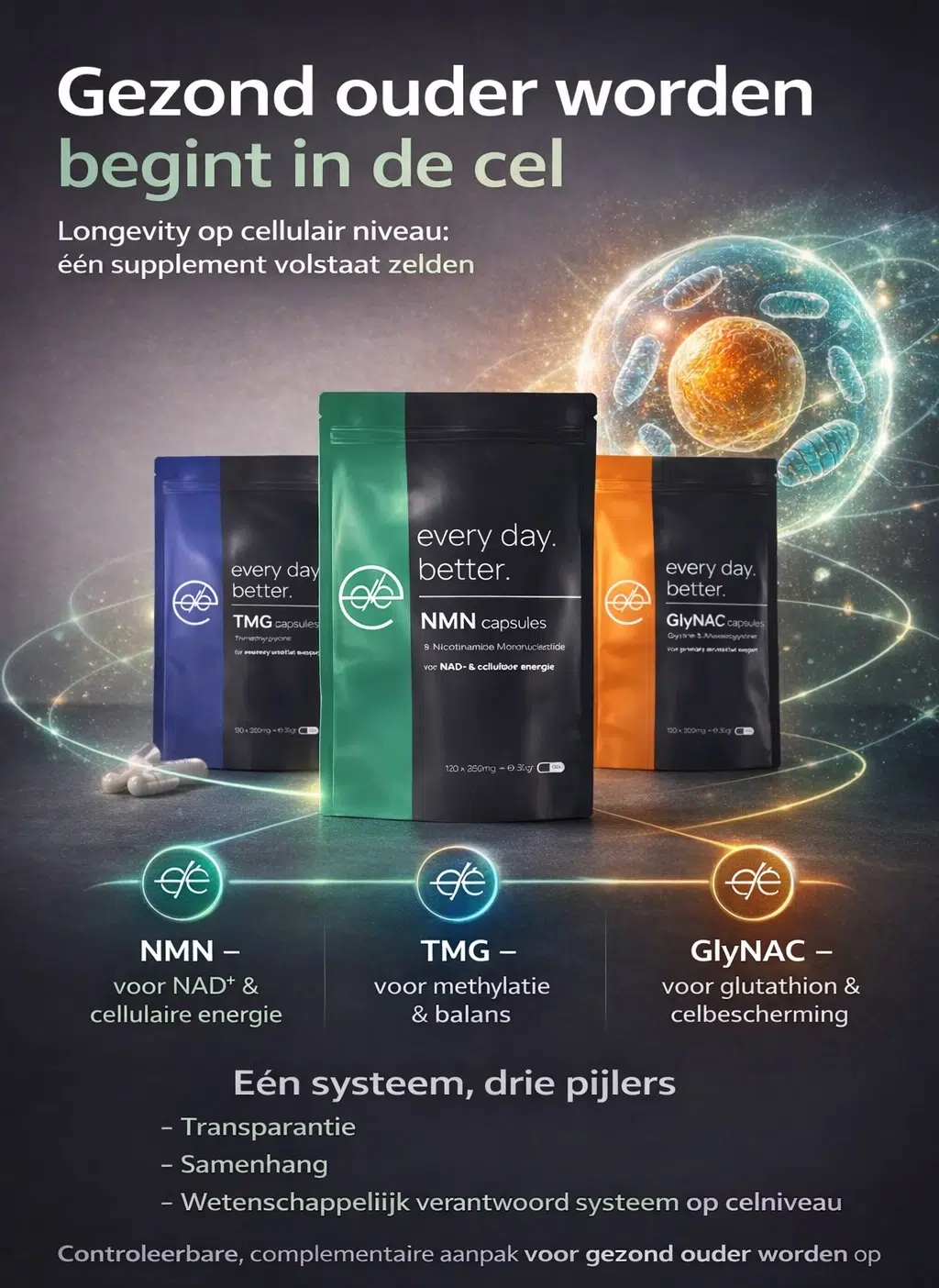
Longevity at the cellular level requires a system, not a single supplement
Aging is driven by multiple, simultaneous processes such as declining mitochondrial function, reduced NAD⁺ availability, increasing oxidative stress, and disruption of methylation. This aligns with the internationally recognized Hallmarks of Aging, which describes aging as a multifactorial biological process.
A strategy that focuses on only one mechanism — for example, only energy or only antioxidants — leaves other aging pathways untouched. This may have a short-term effect, but rarely provides a stable basis for long-term vitality. That is why we do not opt for individual promises or hype-driven solutions, but for an integral longevity system at the cellular level, in which multiple cellular pathways are supported in parallel.
Three pillars for longevity at the cellular level explained
Within this systemic approach, we work with three complementary pillars. Not as individual products, but as coherent support for various biological processes:
- NMN – support for NAD⁺, mitochondria, and cellular energy
- TMG – support for methylation and biochemical balance
- GlyNAC – support for glutathione and oxidative balance
These three pillars are interconnected. Energy production without balance leads to exhaustion; balance without protection is unstable; protection without energy is insufficient. Longevity at the cellular level requires all three.
NMN – NAD⁺ and cellular energy
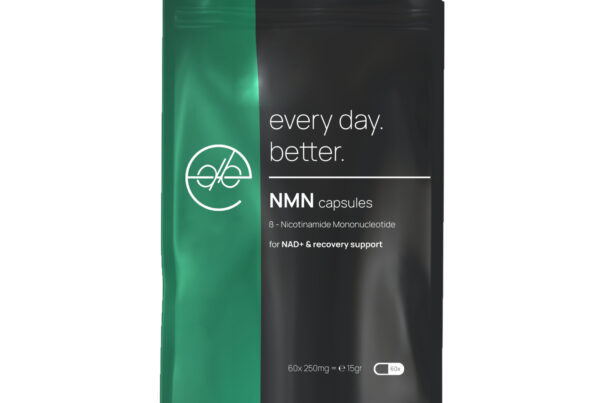
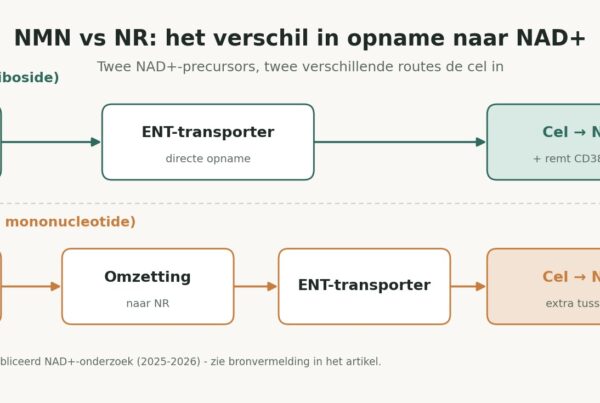
NMN (nicotinamide mononucleotide) is a direct precursor to NAD⁺, an essential coenzyme involved in energy production, DNA repair, and cellular communication. NAD⁺ levels demonstrably decline with age, which is associated with fatigue, a slower metabolism, and reduced cellular-level recovery capacity.
For many people, NMN is therefore a logical first step within longevity. At the same time, the quality of NMN products varies greatly.
Why verifiability is essential for NMN
Many providers mention a purity percentage, but provide no insight into the analysis method, batch differences, or origin of test results. As a result, NMN remains a ‘black box’ for the user.
At Every Day Better, things are different. Every batch is independently tested, the analytical method (such as HPLC) is explicitly stated, and results are transparent. This is not to impress, but to keep long-term use responsible and verifiable. You can read more about this on our page regarding quality and lab testing.
TMG – methylation as a stabilizing factor
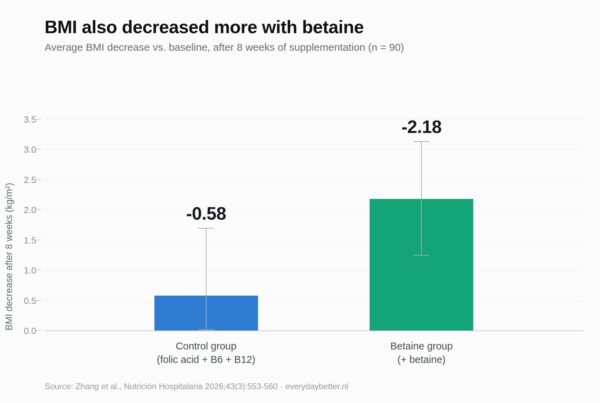
TMG (trimethylglycine) plays a central role in the methylation process. Methylation is involved in, among other things, homocysteine regulation, neurotransmitter balance, and supporting NAD⁺-related processes.
Within longevity at the cellular level, TMG is often underestimated or seen as a side issue. In practice, methylation is essential to keep biochemical processes stable, especially when energy processes are supported for a long time.
TMG as structural support within longevity at the cellular level
When methylation is insufficiently taken into account, this can lead to imbalance in the long term. That is why we do not see TMG as an optional addition, but as a structural part of a responsible longevity protocol. By opting for pure TMG, without unclear blends and with clear explanation, methylation becomes an understandable and verifiable part of longevity at the cellular level.
GlyNAC – oxidative balance and cell protection
GlyNAC combines glycine and N-acetylcysteine (NAC), two amino acids that are together required for the production of glutathione, one of the most important antioxidants in the body.
Protection and recovery as a third pillar
Oxidative stress increases with age and affects both mitochondria and recovery processes. Where NMN focuses on energy and TMG on balance, GlyNAC contributes to protection. By not positioning GlyNAC as a separate antioxidant product, but as part of a system, a balance is created between energy production and stress load.
In conclusion: one system, three pillars
The difference between longevity supplements is rarely in one ingredient. The difference lies in transparency, coherence, and explainability.
Every Day Better chooses not to approach NMN, TMG, and GlyNAC separately, but as a verifiable and biologically logical system at the cellular level. For people who consciously choose energy, focus, and vitality in the long term, it is precisely this approach that makes the difference.
Scientific sources and external references
The information on this page is based on publicly accessible scientific literature and independent research institutes.
For further study and verification, we refer to the following external sources:
-
-
- National Institutes of Health (NIH)
– international research institute in the field of health, supplements, and evidence-based health information - PubMed (U.S. National Library of Medicine)
– database of peer-reviewed biomedical and life science publications - Review: NAD+ metabolism and aging
– overview of the role of NAD+ in aging, cellular energy, and mitochondrial function - One-carbon metabolism and methylation
– scientific explanation of methylation, methyl groups, and biochemical balance
- National Institutes of Health (NIH)
-