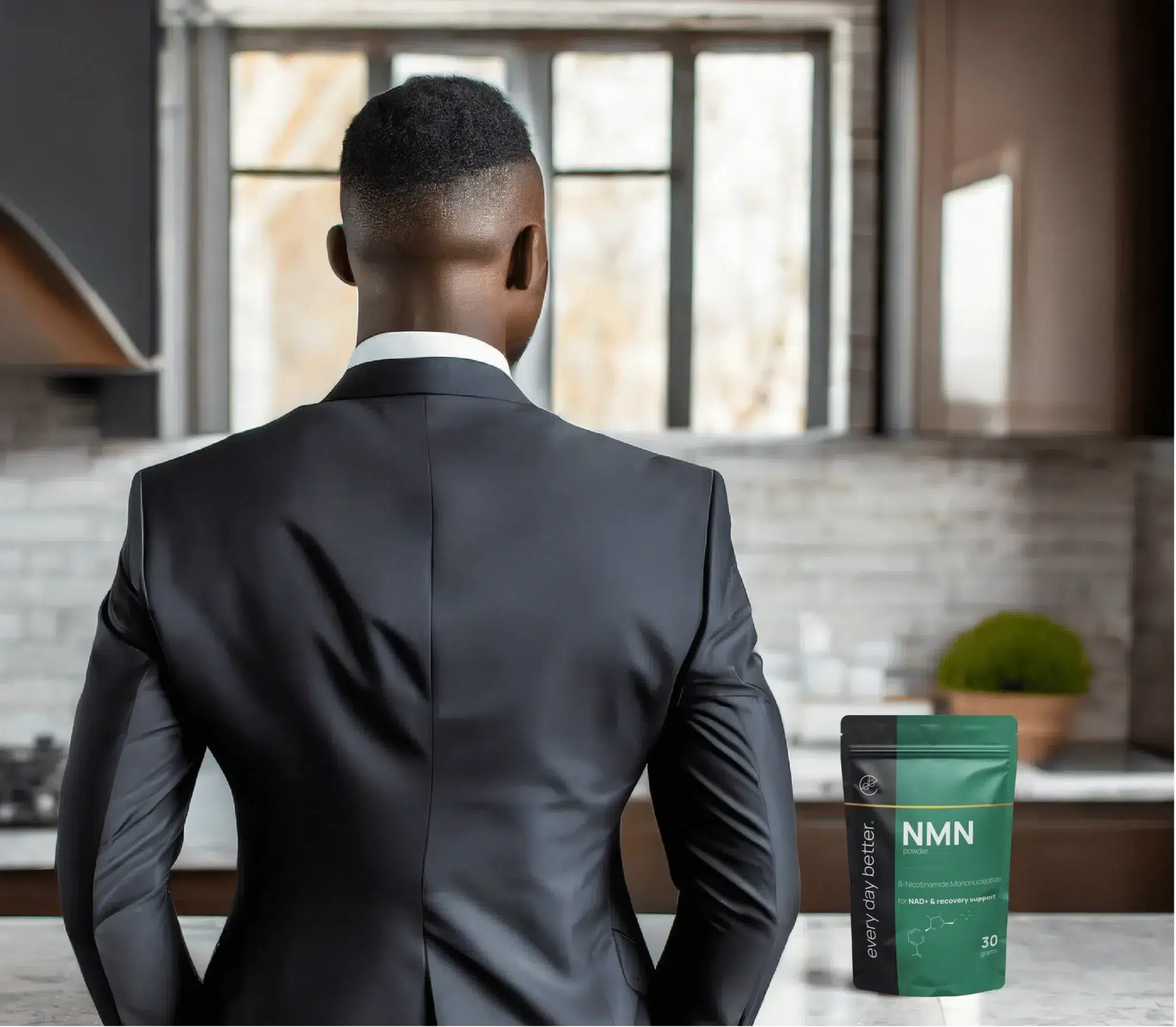
A revolution in aging research: NMN and ChatGPT
The quest for vitality, energy and longevity is as old as mankind itself. In recent years, a molecule called NMN (Nicotinamide Mononucleotide) has caught the attention of scientists and health-conscious consumers alike. At the same time, artificial intelligence (AI), and particularly ChatGPT from OpenAI, is opening doors to a completely new way of interacting with scientific information. At Every Day Better, where we strive to make small, daily improvements for a healthier and longer life, we like to strike these two worlds together.
In this article, we explore:
- What NMN is and why it is so interesting
- How scientific research is evolving
- What role AI and ChatGPT play in understanding NMN
- How you can use these tools for your own health journey
What is NMN?
NMN (Nicotinamide Mononucleotide) is a naturally occurring molecule that is a direct precursor of NAD+ (nicotinamide adenine dinucleotide) – a coenzyme essential for more than 500 enzyme reactions in the human body. NAD+ plays a key role in:
- Energy production (mitochondrial function)
- DNA repair
- Immune response
- Cell renewal
- Sirtuin activation (proteins that regulate aging)
Why does NAD+ decrease with aging?
Studies show that NAD+ levels drop dramatically as we age – as much as 50% by the time we are 50 . This decline is associated with diseases of aging such as:
- Type 2 diabetes
- Cardiovascular diseases
- Neurodegenerative diseases (such as Alzheimer’s and Parkinson’s)
- Reduced muscle function
By supplementing NMN, scientists hope to restore NAD+ levels and thus delay the effects of aging.
What does science say about NMN?
Much preclinical research has already been done on NMN, especially in mice. The results are startling:
- Improved insulin sensitivity
- Delayed neurodegeneration
- Increased physical activity in older mice
- Restoration of mitochondrial function
But the crucial question is: does NMN work in humans?
Clinical research in humans
Several human studies have been initiated in recent years:
- Yoshino et al (2021, Cell Metabolism): This study showed that NMN improved insulin sensitivity in women with prediabetes .
- Wang et al (2022, Aging Cell): NMN supplementation increased NAD+ levels and improved muscle strength in older adults .
- Liao et al (2021, Frontiers in Aging Neuroscience): Discusses NMN as a potential treatment for age-related cognitive decline .
Although promising, most scientists remain cautious: samples are small, methods of administration vary, and long-term effects are unknown.
The problem: How do you keep up in this field of research?
Dozens of new publications are added to databases such as PubMed and ScienceDirect every month. Only a handful make it to the news or popular blogs.
Doing your own research is time-consuming:
- Studies are often written in technical English
- Results are sometimes contradictory
- Finding reliable sources takes experience
That’s where artificial intelligence – and more specifically ChatGPT – comes in.
What is ChatGPT?
ChatGPT is an advanced language model from OpenAI that has been trained on a huge amount of text and scientific literature. It can:
- Answering questions in understandable language
- Summarize lengthy scientific articles
- Provide suggestions for follow-up research
- Structuring and clearly presenting information
And all in seconds instead of hours.
How can ChatGPT help with research on NMN?
For anyone interested in health optimization, biohacking or anti-aging research, ChatGPT offers a set of powerful features. Consider:
1. Quick summaries of scientific studies
You can enter an abstract or link to a study and ask:
“Summarize this article in understandable language.”
Example:
https://pubmed.ncbi.nlm.nih.gov/33545020/
“What is the conclusion of this article on NMN and insulin sensitivity?”
2. Understandable explanations of difficult concepts
Questions like:
- What exactly does NAD+ do in the body?
- How does mitochondrial dysfunction work?
- What are sirtuins?
… are clearly explained, with metaphors and examples.
3. Comparing multiple studies
For example, ask:
“Compare three clinical studies of NMN and physical performance in the elderly.”
ChatGPT can then tabulate differences in dosage, duration, results and side effects.
4. Support in supplement selection
Although ChatGPT may not provide medical advice, it can:
- Explaining differences between brands
- Compare formulations (e.g., capsule vs. powder)
- Provide information on absorption, stability and transport proteins such as Slc12a8
5. Generate research hypotheses
For researchers, ChatGPT can even suggest new studies. For example:
- “What are unexplored effects of NMN on sleep quality?”
- “What biomarkers can measure NAD+ elevation in blood tests?”
Example: NMN and ChatGPT in action
Suppose you are a 45-year-old biohacker and you ask:
“What is the optimal dosage of NMN for people between 40 and 60 years of age?”
ChatGPT can answer based on existing literature and say:
“Clinical studies in humans typically use doses of 250 to 500 mg per day. Some studies are testing 900 mg, but long-term safety is still unknown.”
Sources: Cell Metabolism (Yoshino et al. 2021), Aging Cell (Wang et al. 2022)
Risk and ethics
As with all technological advances, there are caveats:
- ChatGPT is trained on dates until early 2023 (unless connected to live databases)
- AI sometimes generates erroneous or uncontrolled sources (“hallucinations”)
- Medical advice should always be discussed with a professional
So use AI as a tool, not an end station.
What can you do with this knowledge?
At EveryDayBetter.co.uk, we believe in:
- Self-direction: Understanding your body and the science behind it.
- Small steps: Start by measuring, learning and only then supplementing.
- Connection: Use technology such as ChatGPT to make better choices.
Want to use NMN? Then start with:
- Literature search via ChatGPT or Google Scholar
- Consult with your doctor or therapist
- Start low (e.g. 250 mg) and observe your energy, sleep and recovery
Resource List
- Doubling NAD+ decline: Verdin et al. (2013)
- Yoshino et al. (2021) – Cell Metabolism
- Gong et al. (2020) – Neuroprotection
- Mills et al. (2016) – Aging mice
- Wang et al. (2022) – Aging Cell
- Liao et al. (2021) – Front Aging Neurosci
- Slc12a8 transport protein for NMN: Grozio et al. (2019)
In conclusion
The future of health lies at the intersection of biology and technology. Thanks to supplements like NMN and tools like ChatGPT, you can start optimizing your lifestyle today based on the latest science.
Live smarter, not harder. Make each day a little better.
Want to learn how to use ChatGPT for your own health research? Or are you curious about our favorite NMN products? Send us a message or sign up for the newsletter at EveryDayBetter.co.uk.

NMN supplements for energy and vitality
NMN supplements: what is nicotinamide mononucleotide and what should you look for?
NMN, short for nicotinamide mononucleotide, is a precursor to NAD⁺ — a naturally occurring substance in the body that plays an important role in energy production, cellular repair, and processes associated with healthy aging. More and more people are choosing to incorporate NMN supplements into their daily routine, focusing on energy, vitality, and mental clarity.
On this page, you’ll discover what NMN is, how it works in relation to NAD⁺, the difference between NMN capsules and NMN powder, and what to look for when buying NMN.
What is NMN (nicotinamide mononucleotide)?
Nicotinamide mononucleotide (NMN) is a molecule naturally produced in the body that is converted into NAD⁺ (nicotinamide adenine dinucleotide). NAD⁺ is involved in hundreds of biochemical processes, including energy production in the mitochondria, DNA repair and cellular recovery, and the activation of enzymes that contribute to cellular health.
As we age, NAD⁺ levels gradually decline. This is one of the reasons NMN is often used within a longevity-focused lifestyle, with a focus on energy, recovery, and vitality at the cellular level.
How does NMN work in the body?
After intake, NMN is converted by the body into NAD⁺. This molecule plays a key role in processes that directly influence how you feel and function, such as your energy metabolism and cellular maintenance.
Because NAD⁺ levels decline with age, many people choose to use NMN to support these natural processes. As a result, NMN is popular among individuals who are consciously focused on their health, performance, and long-term vitality.
Want to dive deeper? Also check out how NMN works and the science behind NMN.
What are the benefits of NMN?
NMN is often used as part of a daily routine aimed at supporting cellular energy production, mental clarity and focus, recovery after physical exertion, and healthy aging at the cellular level.
- Support for cellular energy production
- Mental clarity and focus
- Recovery after physical exertion
- Healthy aging at the cellular level
The effects experienced may vary per individual and depend on factors such as lifestyle, nutrition, and consistent use.
Want to read more? Check out everything about NMN and 12 things you should know about NMN.
NMN capsules or NMN powder: which is right for you?
Within this category, you can choose between NMN capsules and NMN powder. Both forms contain the same active ingredient but differ in usage and flexibility.
NMN capsules
- Easy to use
- Fixed dosage
- Ideal for daily convenience and consistency
NMN powder
- Flexible dosing
- Suitable for personal optimization
- Often chosen by experienced users
Not sure which to choose? Go for capsules if convenience and routine matter most, and powder if you want more control over your dosage.
Explore our NMN capsules or visit the shop for the full range.
Who is NMN suitable for?
NMN is often used by people who want to support their energy and vitality, are consciously working on healthy aging, want to build a longevity routine, or are looking for more structure and consistency in their supplement use.
- People who want to support their energy and vitality
- People focused on healthy aging
- People building a longevity routine
- People seeking structure and consistency in supplement use
Also read Start every day better with NMN for more context on how NMN fits into a broader routine.
How do you use NMN?
NMN is typically used daily as part of a consistent routine. The exact dosage may vary depending on the individual and their goals. Consistency plays an important role. Many users choose to take NMN in the morning as part of their daily start.
Want to learn more? Read more about NMN dosage.
NMN vs NR: what’s the difference?
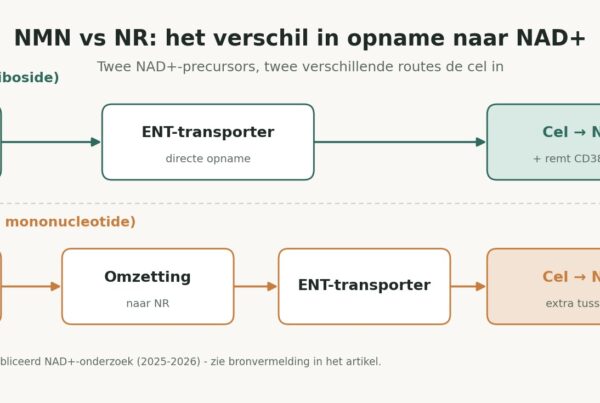
In addition to NMN, there is another NAD⁺ precursor: NR (nicotinamide riboside).
- NMN is converted more directly into NAD⁺
- NR is first converted into NMN before becoming NAD⁺
Both compounds are used with the same goal: supporting NAD⁺ levels in the body.
Read the full comparison on NMN vs NR.
What should you look for when buying NMN?
The quality of NMN supplements can vary significantly. Pay attention to the purity of the raw material, independent testing and transparency, a clear dosage per serving, the absence of unnecessary additives, and reliable sourcing and production.
- Purity of the raw material
- Independent testing and transparency
- Clear dosage per serving
- No unnecessary additives
- Reliable sourcing and production
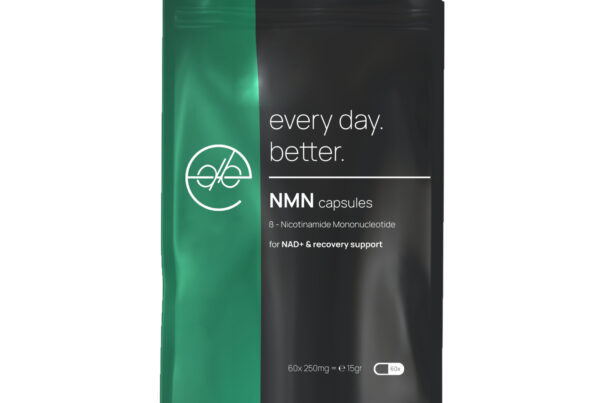
Want to see how Every Day Better approaches this? Check out our NMN certificates and read why buy NMN from Every Day Better.
Why choose Every Day Better?
At Every Day Better, quality and transparency are central. Our NMN supplements are independently tested, contain no unnecessary additives, are developed for daily use, and align with a conscious, long-term health routine.
When you choose NMN from Every Day Better, you choose a thoughtful approach that fits within a sustainable and consistent lifestyle.
Learn more about our vision on Expert in longevity supplements.
Frequently asked questions about NMN
What exactly is NMN?
NMN is a naturally occurring substance that is converted into NAD⁺, an important molecule for energy and cellular health.
What is the difference between NMN and NAD⁺?
NMN is a precursor to NAD⁺. The body converts NMN into NAD⁺.
Are NMN capsules better than powder?
That depends on your preference. Capsules are easier to use, while powder offers more flexibility in dosing.
What should you look for when buying NMN?
Pay attention to purity, independent testing, and brand transparency.
Does NMN fit into a daily routine?
Yes, many people use NMN daily as part of a longevity-focused lifestyle.
Find more answers on our page with frequently asked questions about NMN and on the page about NMN side effects.
Discover your NMN routine
Whether you start with NMN capsules or choose NMN powder, in this category you’ll find supplements that match your goals.
Explore the products and discover what best fits your daily routine for energy, vitality, and cellular health. You can go directly to our NMN capsules or browse the full range in the Every Day Better shop.