

A new blog series for young, new parents. About questions like, “Why am I so tired-even after I’ve had one night’s sleep?” and “Why do I still feel exhausted even though I’ve had a reasonable night?”
Do you recognize this?
You actually slept for five hours straight (a rare miracle), and yet your body feels like you just ran a marathon. Your head is fuzzy, your arms feel heavy, your mood is fragile. You ask yourself, “Is this normal? Or is there something deeper going on?”
You are not alone. And no: it’s not your fault. The extreme fatigue you experience as a young parent is not just a matter of “getting used to” or “getting by. There are real, demonstrable biological processes going on that affect your energy levels at a deep, cellular level.
What’s going on?
You are constantly tired, irritable, easily overstimulated and often feel overwhelmed. Even on days when the baby is cooperating, you feel exhausted. All the while you’ve been sleeping “reasonably”. What many parents don’t realize: fatigue is not always proportional to the amount of sleep. You can have a reasonable night’s sleep, but if your cells are in an energy deficit, fatigue persists. This is also called: cellular energy debilitation.
Why does this happen biologically?
Your body runs on energy. Not only you as a whole, but each individual cell needs fuel to function. The power plants in your cells are called mitochondria. And they need specific excipients to produce energy optimally. One of the most important: NAD+ (Nicotinamide Adenine Dinucleotide).
What is NAD+?
NAD+ is a coenzyme crucial for energy metabolism. Without NAD+, your mitochondria cannot function properly. It is a kind of spark that keeps your cellular engine running.
What sabotages your energy levels as a young parent?
There are several factors that undermine your energy:
Chronic stress: The continuous mental hyperalertness (“Is the baby okay? Is he still sleeping? Where is the pacifier?”) increases your cortisol levels, which consumes NAD+ and interferes with mitochondrial function.
Disrupted circadian rhythms: Babies don’t care about day or night. Your biological clock gets disrupted as a result, which unbalances your mitochondria.
Nutritional deficiencies: Quick snacks, coffee, and poorly balanced meals cause you to miss out on the B vitamins, magnesium, and tryptophan needed to create energy at the cellular level.
Aging: Natural production of NAD+ declines as you age-and let’s face it, children age you 10 years in 3 months.
What can you realistically do?
The good news: there are ways to support your energy metabolism even without guaranteeing six hours of sleep.
1. Exercise without exercising
Short walks, stretches, or five minutes of dancing to music with your baby in your arms can boost your mitochondria.
2. Sleep quality over quantity
Use sleep masks, white noise, and avoid blue light after sunset to make the sleep you do get more efficient.
3. Feed yourself strategically
Focus on energy-rich nutrients such as:
- Oatmeal with nuts
- Green smoothies with magnesium-rich leafy vegetables
- Protein-rich snacks such as boiled eggs or hummus with vegetables
4. Reduce energy leaks
Limit multitasking, defer notifications, and protect your moments of rest as if they were gold.
How does NMN help-and how does it fit into the bigger picture?
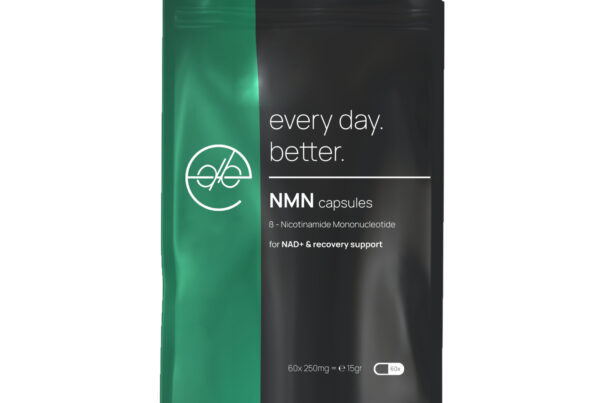
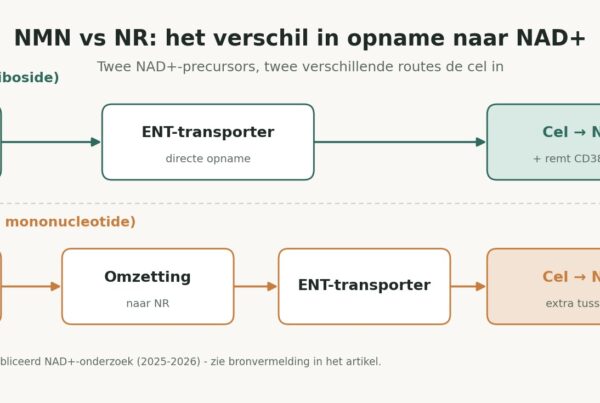
NMN (nicotinamide mononucleotide) is a direct precursor of NAD+. When you take NMN, your body stimulates the production of NAD+-which is essential for:
- Mitochondrial energy production
- Repair of cellular damage (such as that caused by stress and sleep deprivation)
- Improvement in cognitive functions and mood
What does science say?
Research has shown that supplementation with NMN can increase NAD+ levels, especially in people under increased oxidative stress-such as young parents. A recovery of mitochondrial capacity and energy levels was even observed in mouse models.
A widely cited study published in Nature Communications shows that oral administration of NMN in mice led to increased NAD+ levels, improved mitochondrial function and increased physical activity in old age. This suggests that NMN plays an important role in energy metabolism and cell repair in chronic stress and aging.
Don’t see your fatigue as a personal failure
Many parents feel guilty about their fatigue: “Why can’t I cope?”, “Am I weaker than others?”. But this is unjustified. You are not experiencing weakness-your body is communicating a biochemical deficit. By understanding what is going on biologically AND applying realistic strategies, you can slowly restore your energy balance. NMN is not a panacea, but a tool within a broader strategy that takes into account your unique circumstances as a parent.
Next time, “Why do I crave sugar so much since I got older?”
Spoiler: Your brain is screaming for dopamine. Sugar is the quickest route. But there are better ways. We’re going to talk about blood sugar, stress, snack choices and of course: how NMN can help you here too.
Are you interested in NMN? Check out our NMN supplements in the store.