
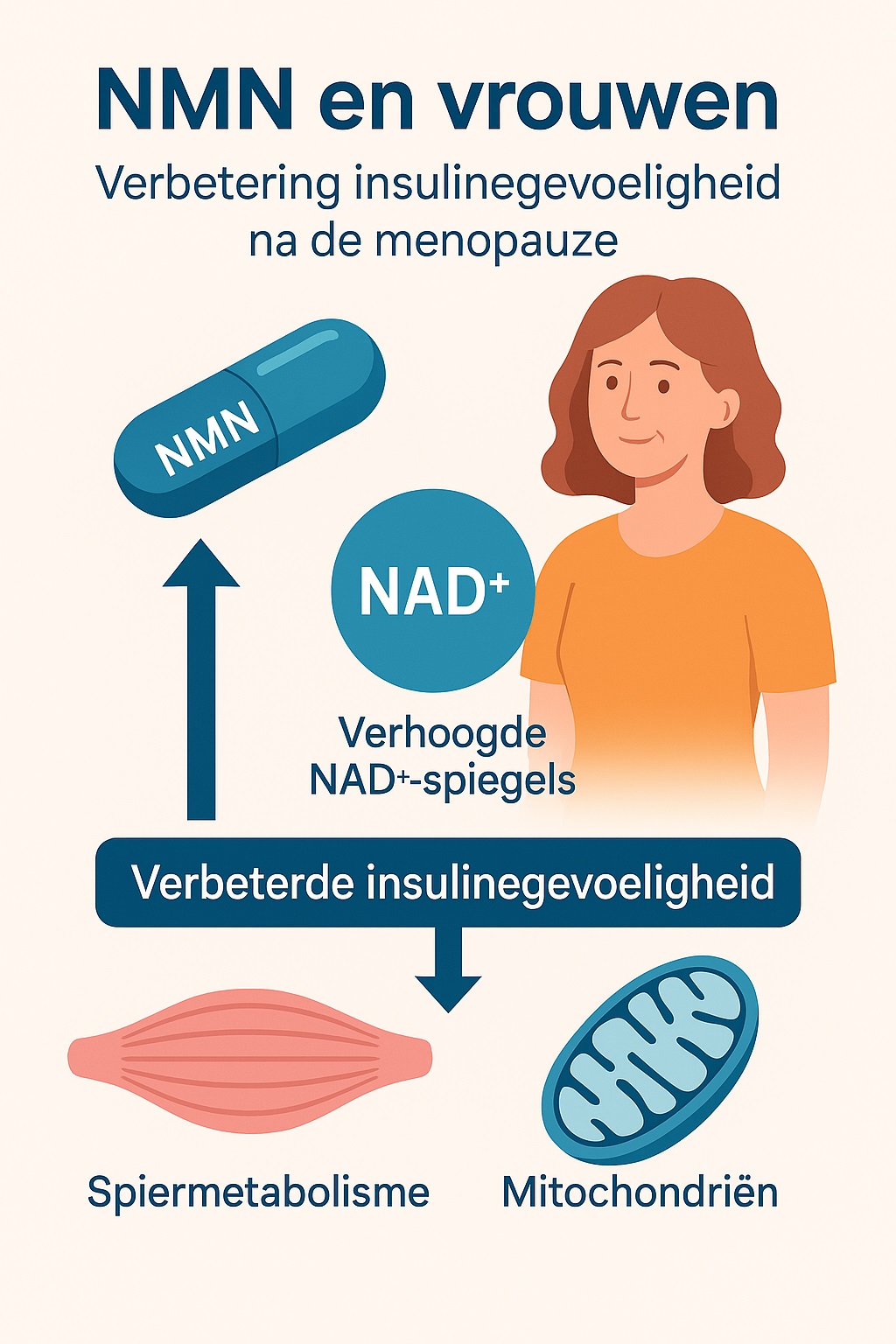
Break through metabolic aging with NMN and women
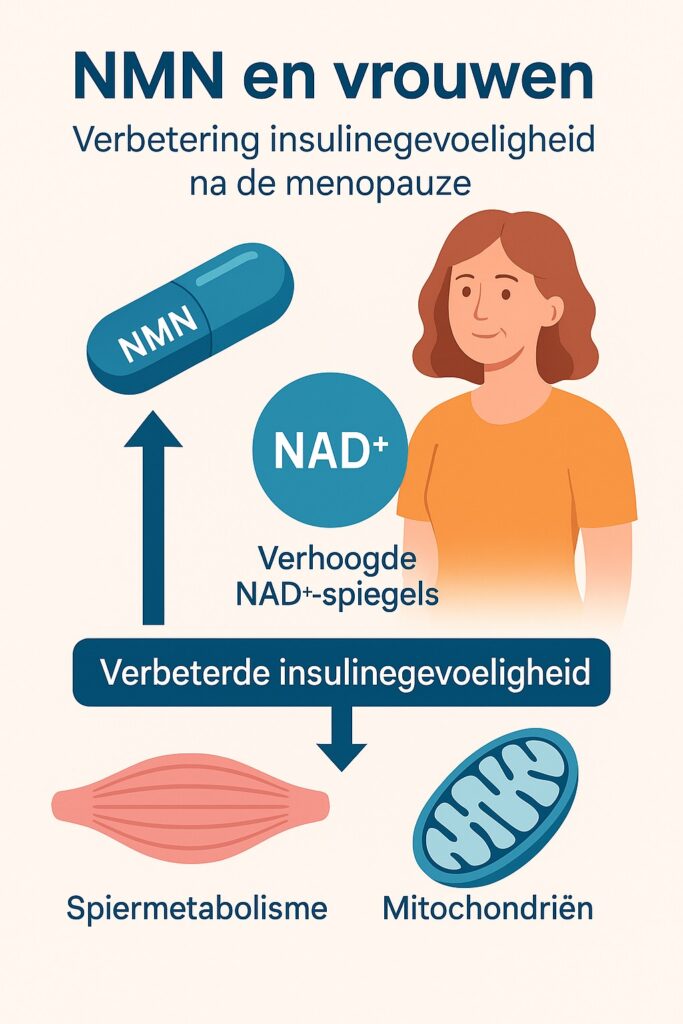
Aging, nutrition, and hormonal changes after menopause reinforce each other and increase the likelihood of metabolic disruptions such as prediabetes. In the context of NMN and women, there has been significant attention in recent years to a clinical line of evidence in which NMN (nicotinamide mononucleotide), a direct NAD⁺ precursor, can improve insulin sensitivity in skeletal muscles of postmenopausal women with prediabetes and overweight.
The foundation for this was laid by a randomized, double-blind, placebo-controlled study, the open PDF of which is available at Science, in combination with a clear study summary from Washington University in St. Louis and additional interpretation by NIDDK. In 2025, this theme was once again widely highlighted in review articles and news reports, further increasing the visibility and relevance of NMN and women.
Would you like to learn more about NMN in general? Please read our article on what NMN is.
In this blog about NMN and women, we cover:
- Clinical trial design and why it is methodologically strong
- The underlying mechanisms of NMN in relation to insulin signaling and muscle metabolism
- The results and what they mean for post-menopausal women
- The limitations of current evidence and what remains to be explored
- The practical implications for NMN and women in daily practice
1. Background – NMN and women in metabolic health.
NAD⁺, NMN and cellular resilience
NAD⁺ is a crucial co-enzyme involved in, among other things, energy production in mitochondria, DNA repair, and cellular stress response. NAD⁺ levels decrease with age. For NMN and women, this is relevant because a declining NAD⁺ status is associated with a higher vulnerability to insulin resistance, fat accumulation in the liver, and declining muscle quality. Reviews in Cell Metabolism and Nature describe how NAD⁺, sirtuins, and mitochondria together play a key role in aging. For an accessible explanation, you may also read our article on how to take NMN powder.
Inclusion of NMN: the transportation issue
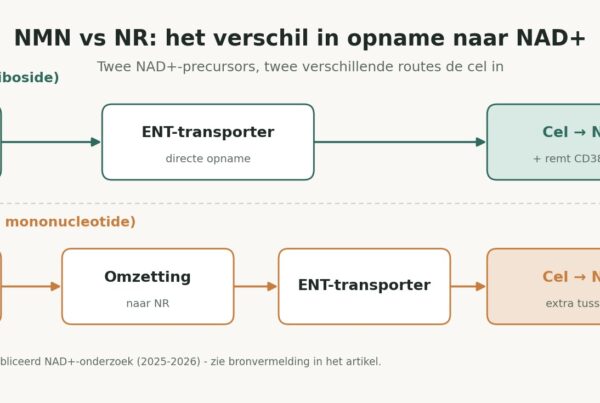
A recurring discussion for NMN and women is bioavailability. Studies in Nature Metabolism and the corresponding Europe PMC summary describe the transport protein Slc12a8 in the small intestine, which can facilitate NMN absorption. Although the clinical relevance of each individual transport pathway is still a matter of debate, this framework helps to understand how NMN and women can theoretically benefit from a more efficient absorption and distribution of NAD⁺ precursors.
Why focus on NMN and post-menopausal women?
After menopause, the hormonal environment changes dramatically. These shifts affect glucose metabolism, fat distribution, inflammatory activity and muscle mass. As a result, skeletal muscle – the primary organ for peripheral glucose uptake – becomes a strategic target. When NAD⁺ drops here and attenuates insulin signaling, it creates precisely the window in which NMN and women can make a difference. By increasing NAD⁺ with NMN, downstream processes such as sirtuin activity, mitochondrial biogenesis and AKT/mTOR signal transduction can benefit. The clinical signal documented in Science is substantively consistent with this mechanistic logic.
Would you like to learn more about the practical benefits? See Buy NMN.
2. Research methodology – what did the RCT show?
A strong reason why the findings around NMN and women are widely cited is the methodological quality of the study. In the open pdf at Science, the details can be reviewed at length; the WUSTL summary summarizes the main points in a readable way.
- Design: randomized, double-blind, placebo-controlled; duration 10 weeks
- Population: postmenopausal women with prediabetes and overweight/obesity
- Intervention: 250 mg NMN per day (oral)
- Primary outcome: skeletal muscle insulin sensitivity measured with the hyperinsulinemic-euglycemic clamp, a method described in detail in Wikipedia and considered the gold standard
- Secondary outcomes: (1) signaling pathways in muscle, including AKT and mTOR phosphorylation, and (2) gene expression markers for muscle remodeling such as PDGFRβ, in addition to (3) body composition measured with DEXA/MRI
The clamp methodology is intensive and costly, but provides very pure measurements. This is exactly why this RCT is so often cited in discussions about NMN and women: the primary endpoint actually says something about functional insulin response in the target tissue (skeletal muscle).
3. Results – why are NMN and women such a strong combination?
(a) Skeletal muscle insulin sensitivity
The intervention with NMN led to a significant improvement in insulin sensitivity in skeletal muscle compared to placebo. This is particularly relevant for NMN and postmenopausal women, as skeletal muscle is by far the largest glucose sink. The Science publication and the NIDDK entry clearly explain that this very improvement may be a clinically meaningful step in reducing insulin resistance.
(b) Stronger insulin signaling (AKT/mTOR)
In addition to the functional outcome through the clamp, muscle biopsies showed an increase in phosphorylation of AKT and mTOR, two cornerstones in the insulin signaling and anabolic response of muscle. The WUSTL summary describes these findings as a plausible mechanistic pathway through which NMN and women can benefit.
(c) Muscle remodeling (PDGFRβ)
PDGFRβ expression indicated tissue remodeling and repair. This detail gets less attention in headlines, but is of interest to NMN and women: structural modifications in muscle tissue can support the durability of metabolic improvements, especially when lifestyle interventions are added.
(d) Effect size in context
Summary articles, such as at MASI Longevity Science and NMN.com, report an effect size equivalent to about a quarter improvement in muscle insulin sensitivity, depending on the exact measure and subanalysis. While secondary sources should always be read with nuance, they place the clinical signal of NMN and women in a framework that is understandable to laypersons and may prompt professionals to consider follow-up research.
4. Mechanisms – how does it work with NMN and women?
4.1 NAD⁺-boost as a starter switch
Both Cell Metabolism and Nature describe that elevation of NAD⁺ has downstream effects on sirtuins, mitochondrial function, DNA repair and oxidative stress. In NMN and women, especially in the postmenopausal context, this may improve metabolic flexibility in skeletal muscle.
4.2 Insulin signaling via AKT/mTOR
The study results suggest that NMN is able to sensitize the AKT/mTOR signaling pathway. Better functioning AKT/mTOR means more efficient glucose transport to the muscle cell and better glycogen synthesis. This pathway is exactly where insulin resistance manifests itself and where NMN and women can gain clinical benefit, as also documented in Science.
4.3 Muscle remodeling and recovery
PDGFRβ and other markers mentioned in the WUSTL summary indicate adaptive changes in muscle tissue. With NMN and women, you can therefore not only improve acute signaling, but possibly also structural features that support the duration of the effect – especially when women additionally employ strength training and protein-rich diet.
4.4 Recording and availability (Slc12a8)
The observations around Slc12a8 in Nature Metabolism and the Europe PMC summary are important in the discussion of NMN and women: the more efficient the uptake, the more likely NAD⁺ is to increase in relevant tissues. Although more clinical data on this is desirable, this mechanistic framework helps to better understand the heterogeneity in response between individuals.
5. What do the findings mean for NMN and women?
5.1 For which women is this relevant?
The target population in the RCT is postmenopausal women with prediabetes and overweight/obesity. In this group, insulin resistance is a strong driver of cardiometabolic risk. The fact that NMN shows a skeletal muscle-specific benefit precisely here makes NMN and women particularly interesting for risk-based prevention and support.
5.2 What can you expect in practice?
The primary benefit described in Science revolves around insulin sensitivity in muscle, not directly weight loss or fat mass reduction. For NMN and women, this means: count on metabolic gains in target tissue, but always combine this with exercise, strength training, sleep optimization and nutritional interventions to consolidate results.
5.3 Integration with lifestyle
The key message for NMN and women is “and-and.” NMN is not a stand-alone solution; it is potentially synergistic with exercise, protein timing, fiber- and polyphenol-rich nutrition and stress reduction. In such an integrated approach, improvements in clamp-measured insulin sensitivity are most likely to translate into longer-term clinically noticeable outcomes.
6. Limitations of current evidence on NMN and women.
6.1 Duration and scope
The RCT lasted 10 weeks and had a small sample size. For NMN and women, longer interventions are needed to assess whether insulin sensitivity remains at, or continues to improve, and whether this translates to HbA1c, fasting glucose, liver fat and muscle function.
6.2 Generalizability
The population consisted of postmenopausal women with prediabetes and overweight/obese. It is unknown whether the same effects apply to younger women, normal-weight women, women with type 2 diabetes, or men. More stratifications are needed for responsible advice to broad target groups.
6.3 Organ-specific effects
The strongest signals concern skeletal muscle. For liver and adipose, the effects are less clear. Articles summarizing the field, such as at MASI Longevity Science and NMN.com, highlight this organ specificity. For NMN and women, this means that additional markers (e.g., liver enzymes, MRS liver fat) will be crucial in future research.
6.4 Dose and long-term safety
The dose of 250 mg/day was well tolerated in the RCT. Separate safety studies among healthy adults with higher doses exist, but translating such regimens to NMN and women in a clinical setting requires caution. Larger phase 2/3 studies are needed for safe and effective long-term use.
7. Practical implications – how do you translate NMN and women into practice?
7.1 For whom is NMN useful to consider?
- Postmenopausal women with prediabetes and overweight/obese exploring metabolic interventions under the guidance of their health care provider.
- Women who already do strength training and want to optimize their muscle metabolism, provided there is medical alignment and contraindications are excluded.
7.2 Dosing logic and monitoring
- Starting point: align with the RCT by using 250 mg/day, preferably at a fixed time and in a consistent routine.
- Monitoring: periodic fasting glucose, HbA1c, fasting insulin and, where possible, surrogate measures that reflect insulin resistance.
- Lifestyle combinations: link to high-protein diet (per meal), resistance training (2-3× per week), aerobic exercise (150-300 min/week), sleep (7-9 hrs) and stress management.
7.3 Expectation management for NMN and women
- What is: improvement in muscle insulin sensitivity and signaling pathways associated with better glucose uptake.
- What is not automatic: immediate and substantial weight loss or fat mass reduction – for that, diet and training remain decisive.
- Fringe condition: medical supervision for comorbidities or medication use (e.g., metformin, SGLT2 inhibitors).
8. Further research questions around NMN and women
- Duration and durability: does the effect on muscle insulin sensitivity persist beyond 6-12 months?
- Response differences: which subgroups within NMN and women benefit the most (age, BMI, body-fat distribution, training status)?
- Combination strategies: how does NMN stack with protein timing, interval training, strength training and sleep interventions?
- Organ-specific: do improvements in liver fat or adipose signaling occur with longer duration?
- Clinical endpoints: does clamp gain translate to HbA1c drop, less NAFLD or better VO₂max?
- Safety: what are the long-term profiles for NMN and women, including interactions with hormone supplementation or antidiabetics?
9. Conclusion – NMN and women as a roadmap for metabolic resilience
The combination of NMN and women stands on a solid but growing clinical foundation. The cluster-measurement randomized trial in Science shows that 250 mg NMN daily for 10 weeks can improve insulin sensitivity in skeletal muscle of postmenopausal women with prediabetes. The WUSTL summary and interpretation by NIDDK reinforce the credibility of these findings. Mechanistically, the results are consistent with the idea that increasing NAD⁺ has downstream effects on sirtuins, mitochondria, AKT/mTOR and muscle remodeling.
For practice, this means that NMN and women are especially promising in an integrated approach: supplementation as a driver of muscle metabolic improvements, embedded in strength training, daily exercise, smart nutrition and good sleep. With longer and larger studies, the field can better determine how durable the effects are, for which subgroups they are greatest, and how NMN compares with other interventions in the arsenal against insulin resistance.
Resources
- Science – open pdf of the RCT
- Washington University in St. Louis – study summary
- NIDDK – research update
- Cell Metabolism – review NAD⁺ and sirtuins
- Nature – overview NAD⁺ metabolism
- Nature Metabolism – Slc12a8 research.
- Europe PMC – summary Slc12a8
- Wikipedia – glucose clamp technique
- MASI Longevity Science – biomarkers
- NMN.com – metabolic benefits